
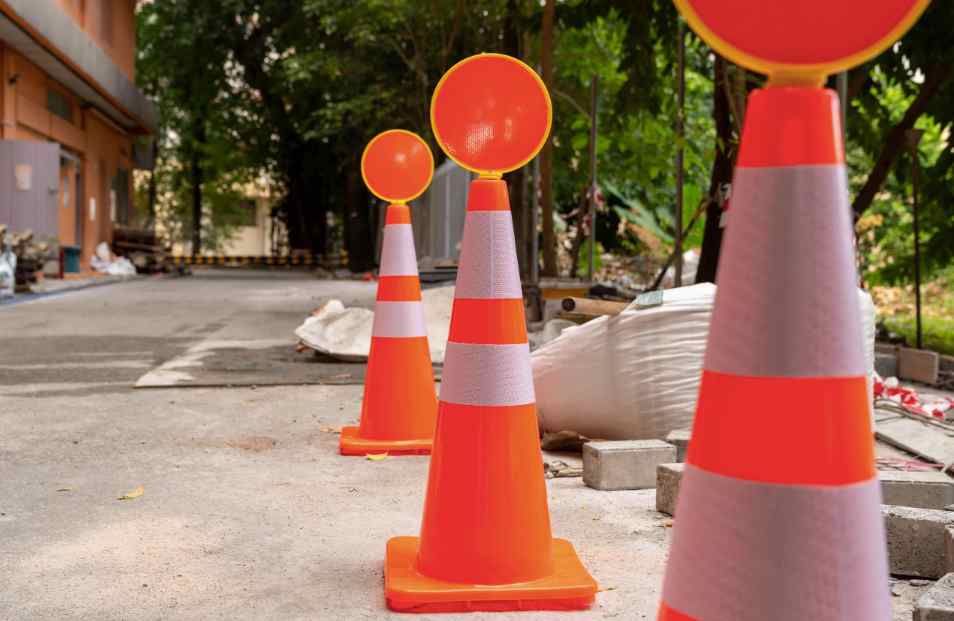
A single blind spot collision in your loading dock or construction zone can cost thousands in equipment repairs, medical payouts, and project downtime. When vehicles and ground crews share tight spaces, clear physical boundaries are your first line of defense. In my experience auditing industrial facilities and roadway projects.
Deploying certified road safety equipment is the fastest way to control traffic flow and prevent serious accidents. Setting up high-visibility barriers, warning signs, and physical speed controls cuts site incident rates by over 40% while keeping your operations fully compliant.
The Real Cost of Low-Grade Traffic Gear
The mistake I see most often is treating traffic management as an afterthought and buying bargain gear that fails under real-world conditions. Cheap plastic cones fade in the sun, light barriers blow over in the wind, and poorly marked corners leave drivers guessing.
- Low retroreflectivity: Inferior reflective collars fail in heavy rain, fog, and angled headlights, creating severe hazards for night-shift crews.
- Unstable, lightweight bases: Hollow cones topple over under wind drag from heavy passing trucks, turning into road hazards themselves.
- Unprotected blind spots: Tight warehouse corners and blind dock exits cause repeated collisions without convex mirrors to guide drivers.
Core Gear Needed for High-Risk Work Zones
Here is what actually works when structuring a secure traffic perimeter around your facility or job site.
Heavy-Duty Cones and Delineator Posts
- Heavy recycled-rubber bases hold delineators upright against strong winds and vehicle drafts.
- High-intensity prismatic reflective collars provide clear lane guidance during night work and low-visibility weather.
- Perfect for setting up temporary lane closures and separating pedestrian walkways from vehicle traffic.
Modular Rubber Speed Humps and Wheel Stops
- Industrial-grade rubber segments absorb vehicle impact and physically force drivers to slow down near crossings.
- Embedded reflective beads ensure maximum visibility even under low-beam vehicle lights.
- Solid wheel stops prevent delivery trucks and forklifts from rolling into building walls and loading docks.
Shatterproof Convex Mirrors and Visual Barriers
- Wide-angle polycarbonate mirrors eliminate dangerous blind spots at sharp corners and warehouse intersections.
- Water-fillable plastic barriers provide a physical, high-visibility perimeter around open trenches and construction areas.
3 Rules for Maximizing Site Safety
Buying durable gear is only half the battle. You must position it properly to prevent incidents:
- Calculate stopping distances: Place advance warning signs far enough ahead of the work area so loaded trucks have adequate braking distance.
- Anchor equipment to the road surface: Bolt speed humps and wheel stops down with heavy-duty anchors so they do not shift under continuous axle loads.
- Inspect safety markers daily: Have your safety marshal check that all cones, warning lights, and reflective tapes are clean and positioned correctly at the start of every shift.
Conclusion
Reliable traffic management demands durable equipment built to handle continuous vehicle impact, heavy weather, and rough site use. Equipping your facility with professional-grade road safety gear gives drivers clear visual boundaries, keeps your crew out of harm’s way, and protects your business from costly liability claims.