
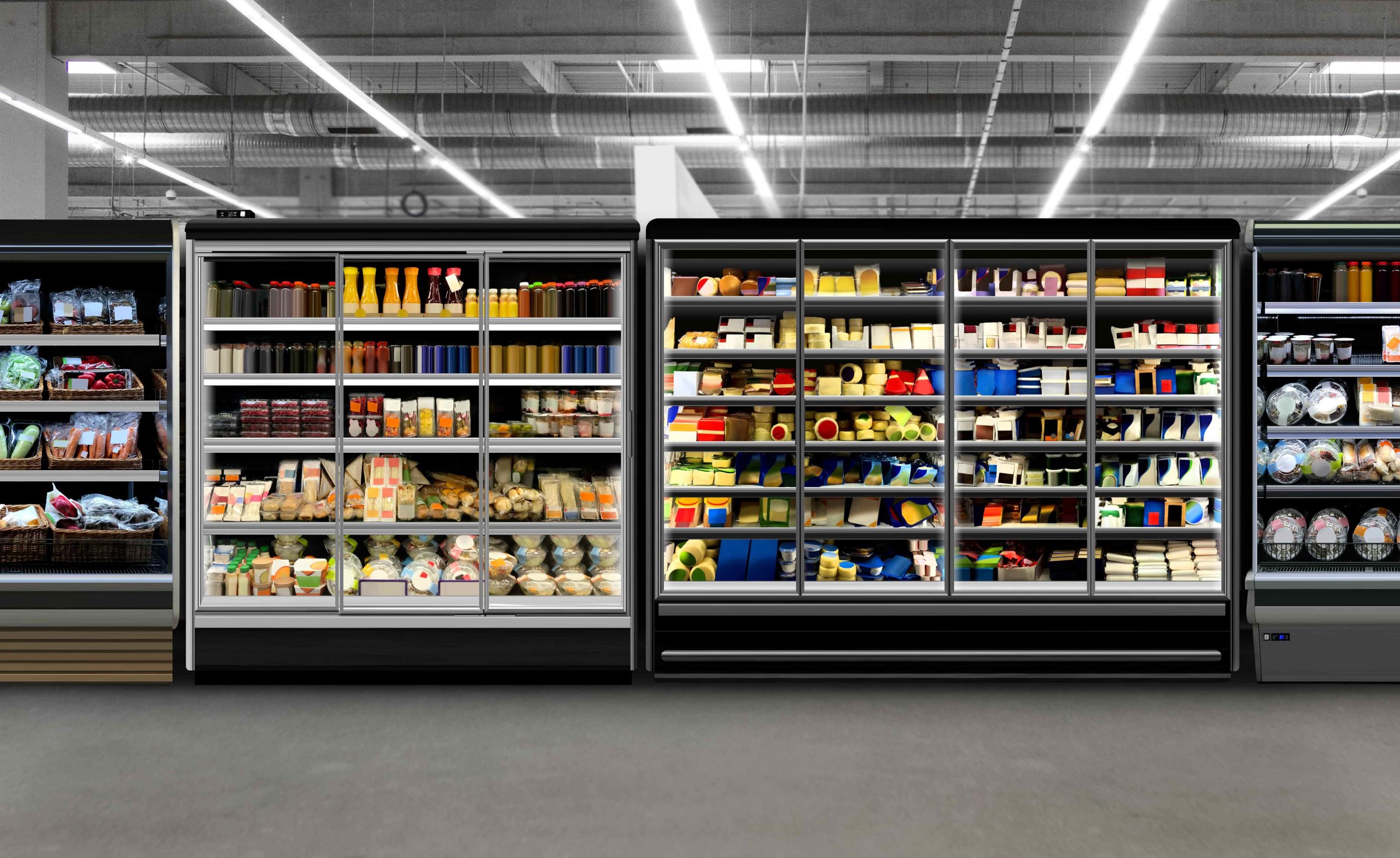
Choosing the right commercial fridge for a food business is partly about capacity and partly about how the unit fits into the workflow. A large reach-in refrigerator in a kitchen that needs immediate access to ingredients during service works differently from a pass-through unit in a busy restaurant or a display fridge on the front counter. Getting the type right matters as much as getting the size right.
What Are the Main Types of Commercial Refrigeration for Food Businesses?
Reach-in refrigerators are the standard back-of-house unit. They have one to three full-length doors and provide bulk cold storage for ingredients, prepared items, and stock. The door configuration, internal shelf layout, and temperature range (standard refrigeration versus low-temp freezer) should match how the kitchen actually organises and accesses product during service.
Undercounter refrigeration units fit beneath preparation benches and keep ingredients at the point of use without requiring the cook to walk to a reach-in during service. For high-volume kitchens with defined work stations, undercounter units at each station reduce movement and speed up the cooking process in ways that reach-in units can’t replicate.
Walk-in cool rooms are the appropriate solution for businesses that need to store large volumes. A walk-in cool room allows full pallet or bulk delivery to be stored in a single space and accessed with trolleys, which is impractical with standard reach-in units. The capital cost of a walk-in is significantly higher, but the storage-per-rand-invested ratio is usually better at high volumes.
What Makes Display Fridges Different From Back-of-House Refrigeration?
Display fridges are designed to show product attractively while maintaining the correct temperature for food safety. They include glass fronts or open fronts that allow customers to see the product, internal lighting to present the food clearly, and typically a forced-air refrigeration system that maintains consistent temperature even as the door is opened repeatedly during trading hours.
The distinction matters for specification because a display fridge operates under different thermal conditions than a closed back-of-house unit. The continuous exposure to ambient temperature through the open or glass front means the refrigeration system has to work harder to maintain temperature. Specifying a display fridge with insufficient compressor capacity for the ambient temperature of the trading environment is a common cause of display units failing to hold the correct temperature during busy service periods in warm weather
What Temperature and Compliance Requirements Apply to Commercial Refrigeration?
In South Africa, food safety regulations require that ready-to-eat foods are stored at or below 5 degrees Celsius. Raw meat should be stored at 0 to 3 degrees. Compliance with these temperature ranges is the minimum requirement, and a food service business that cannot demonstrate its refrigeration equipment maintains correct temperatures during trading hours is exposed to food safety compliance risk.
A calibrated thermometer in each unit and a regular temperature log are basic food safety controls that any established food business should have in place. The refrigeration equipment itself should have a visible and accurate internal thermometer as a minimum, and many modern commercial units include data logging or alert systems that flag temperature exceedances automatically.
Frequently Asked Questions
How often does commercial refrigeration equipment need to be serviced?
A full service including condenser coil cleaning, refrigerant level check, door seal inspection, and temperature calibration verification should be done annually at minimum. Condenser coils in commercial kitchens collect grease and dust faster than domestic units, and a blocked condenser significantly reduces efficiency and increases running cost. In dusty or greasy kitchen environments, a six-monthly condenser clean is worth scheduling as a separate maintenance task.
What energy efficiency considerations apply to commercial fridges?
Commercial refrigeration is one of the largest electricity consumers in a food service operation. Units with higher Energy Star ratings or equivalent energy efficiency certifications cost more upfront but reduce running costs over their lifespan. In South Africa’s load shedding environment, refrigeration equipment that can resume from a power outage automatically and with a fast temperature recovery capability reduces the food safety risk during and after outages.
What is the difference between a remote and a self-contained commercial fridge?
A self-contained unit has the compressor and refrigeration components built into the unit itself. A remote system has the compressor and condenser located outside the kitchen, usually on the roof or in a plant room, with only the evaporator and fan inside the unit. Remote systems produce less heat in the kitchen, which reduces air conditioning load during service. They are more expensive to install but better suited to large-scale commercial kitchens where kitchen heat management is a meaningful operational concern.