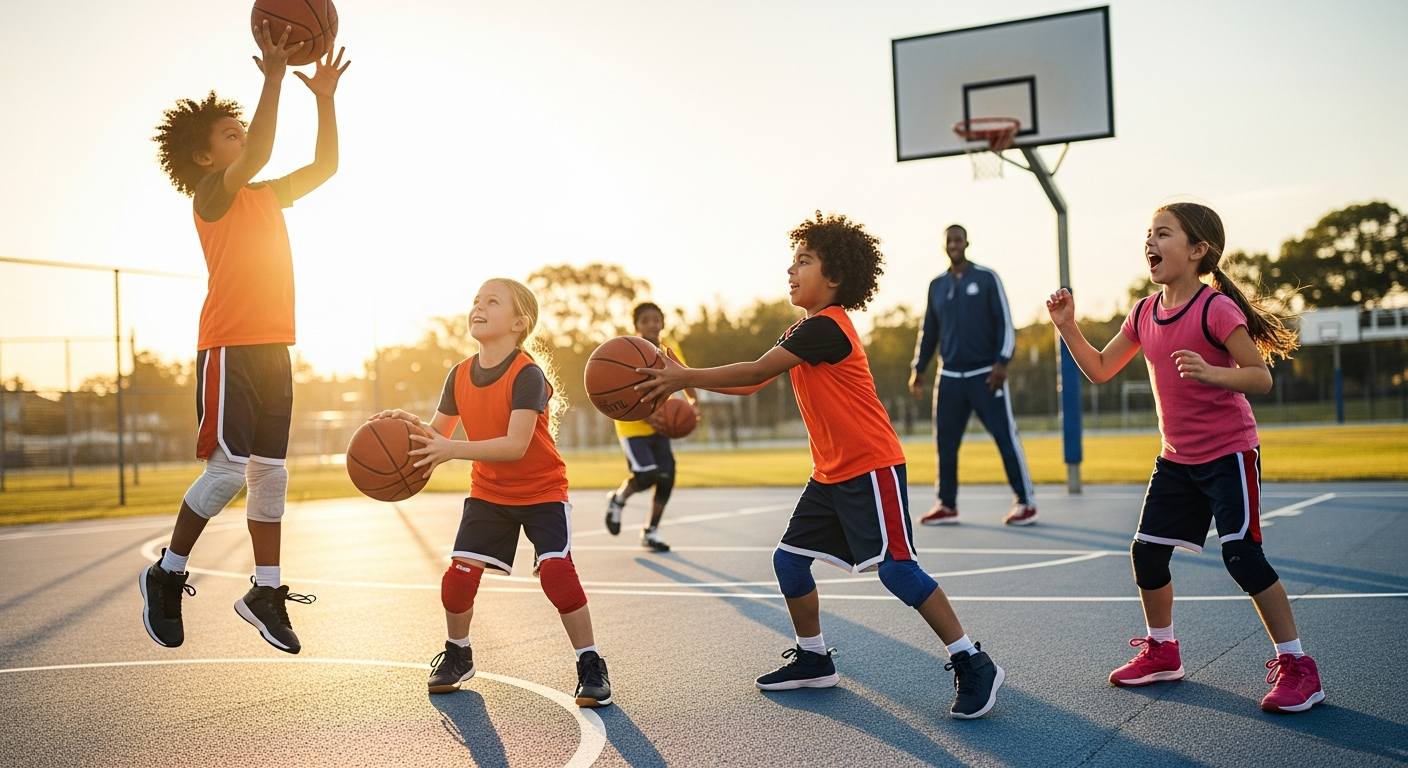
Developing basketball skills in children means making practice fun and focusing on the basics. The best approach is to help kids playfully learn dribbling, passing, and shooting from a young age. Children learn through play, so use easy drills and games that feel like play. For example, bouncing a ball through cones or shooting contests in the driveway can teach control and form without pressure. Research shows that basketball naturally improves speed, agility, strength and coordination, so practicing these basic moves builds overall motor skills.
You should keep activities short and positive. Young children have short attention spans, so sessions of 10–15 minutes work best. Experts advise emphasizing fun, exploration and simple skill practice rather than strict competition for kids under 6. For slightly older children (6–9 years), coaches recommend sticking to fundamental drills and keeping rules flexible. Always use age-appropriate equipment (smaller balls, lower hoops) and praise every effort. In short, make learning feel like a game and avoid pushing them into serious games too early.
Key Skills to Practice
-
Dribbling: Teach kids to dribble with both hands by practicing fun drills. For instance, have them weave a ball through a line of cones. This cone-dribbling game forces them to change direction and keep the ball under control, which builds coordination and confidence. Other ideas are “dribble tag” or bouncing the ball to reach a certain number of touches. The goal is simple: let them dribble a lot. With practice, they learn to keep their head up and handle the ball even when they move fast.
-
Passing: Use partner drills to practice chest passes and bounce passes. Pair kids up about 8–10 feet apart and have them pass the ball back and forth. Focus on stepping toward the target and using two hands for accuracy. As they improve, move the partners farther apart. Games like “monkey in the middle” or circle passes make it fun and encourage quick reactions. Accurate passing is key to teamwork, and regular practice helps children learn to time their passes and catch the ball smoothly.
-
Shooting: Start close to the basket so kids can make shots easily. Teach proper shooting form: bend the knees, hold the ball correctly, and flick the wrist on follow-through. One drill is to have them shoot from 3–5 feet away, focusing only on form (one hand behind back). When they can make many shots in a row from close range, move them a bit farther. Turn shooting practice into a game (like “HORSE” or “Around the World”) to keep it fun. This repetition helps build muscle memory and consistency.
-
Footwork & Defense: Good footwork underlies all play. Simple “mirror” drills are great for teaching defense. In a mirror drill, one child moves side to side while the other tries to copy each move without crossing their feet. This teaches players to stay low and shuffle quickly. You can also practice quick feet with ladder drills or cone shuffle games. Even just running and jumping games help develop the balance and agility needed for sports. Learning to move correctly and react fast will help in defense (staying in front of an attacker) as well as in offense (cutting and changing direction smoothly).
Make Practice Fun
Kids stick with basketball when they enjoy it. Turn drills into games whenever possible. For example, play small-sided games (3v3 or 4v4) instead of full team scrimmages. Small games give each child many more chances to touch the ball, make a shot, or defend. One youth coaching program notes that these game-like scenarios “increase each child’s involvement” and teach decision-making under pressure. Keep score lightly or reward teamwork (for instance, count assists as extra points) so teamwork is encouraged.
Remember that most children play to have fun. In fact, a survey found 74% of kids say “to have fun” is their main reason for playing basketball. So keep smiles and praise flowing. Use positive reinforcement: celebrate made baskets, good effort, and even simply trying hard. Change up activities often to hold their interest. For very young players, you might use ball games like “dribble tag,” passing races, or shooting contests. The key is to make practice feel like play.
Encourage and Support
Be patient and keep a positive attitude. Young players will improve at their own pace. Focus on effort and progress rather than winning. For example, praise a child for successfully using their non-dominant hand or making a helpful pass. Avoid harsh competition or criticism, especially at early ages. Instead, set small goals (make 5 shots in a row, dribble all the way up the court without losing the ball, etc.) so kids can experience steady success.
Also encourage kids to try different activities. Basketball skills will grow when children develop general athletic ability. Experts advise that children should play a variety of sports or games rather than specialize in one sport too early. This variety keeps them excited and builds all-around fitness. It’s fine to join a team or program, but make sure the emphasis stays on learning and fun.
Teaching good sportsmanship is part of developing skills. Children learn teamwork, discipline and confidence along with physical skills. In fact, youth sports help build friendships and self-esteem. As their skills grow, their confidence and teamwork do too. Always remind kids that every player started as a beginner. With consistent practice of the basics and a supportive coach or parent, even shy or cautious children can become eager and capable players.
Developing basketball skills in children is a gradual process. By focusing on fun, practicing fundamental drills regularly, and offering plenty of encouragement, you help young players build a strong foundation. Over time, these skills will translate into better play on the court – and even in life – as kids learn confidence, teamwork, and a love of staying active. Remember: make it playful, keep at the basics, and celebrate each step of progress. Soon you’ll see your child’s skills and passion for basketball grow.